
Broken chains, damaged rings, bent bangles, missing-stone jewelry, and other unwanted gold pieces may seem worthless—but they can still have significant value. In many cases, gold buyers purchase damaged jewelry based primarily on its gold content and purity, rather than its condition.
If you have broken or damaged gold jewelry sitting unused at home, selling it can be a practical way to turn it into cash. Here’s what you should know before you sell.
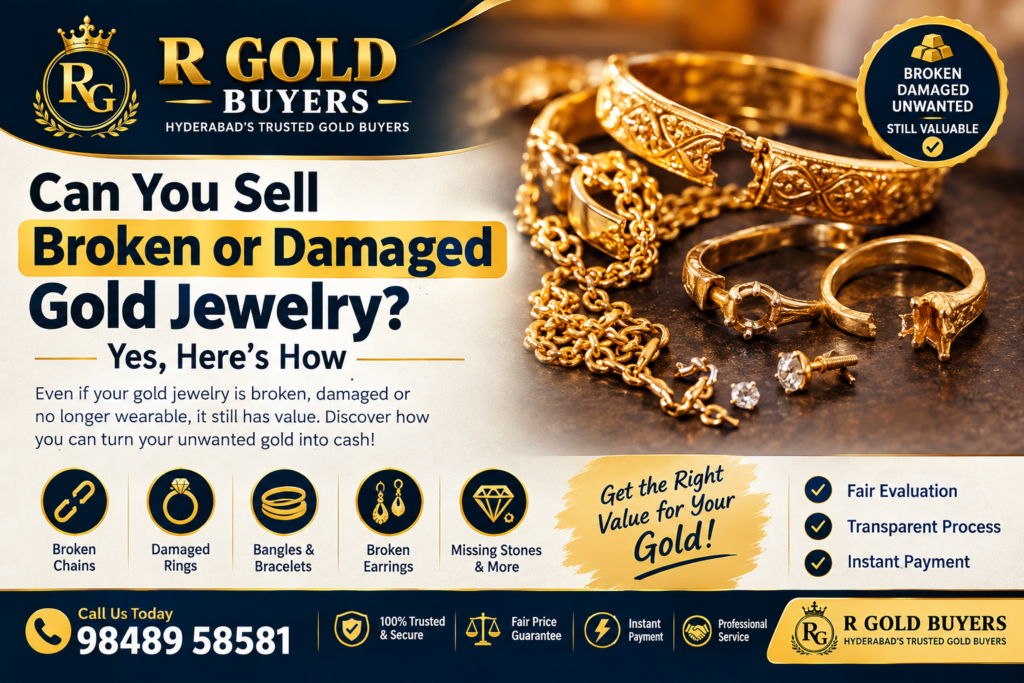
Can You Sell Broken or Damaged Gold Jewelry?
Yes. Most broken or damaged gold jewelry can be sold.
Gold itself retains value even when the jewelry is no longer wearable. Buyers typically assess factors such as:
- Gold purity
- Total gold weight
- Current gold market price
- Presence of gemstones or other materials
- Applicable deductions and processing charges
- Buyer’s pricing policy
A broken necklace or damaged bracelet may therefore still be worth a substantial amount if it contains genuine gold.
What Types of Damaged Gold Can You Sell?
Gold buyers commonly accept various forms of damaged or unwanted jewelry, including:
- Broken gold chains
- Bent or damaged rings
- Old bangles
- Broken earrings
- Damaged bracelets
- Single gold earrings
- Gold jewelry with missing stones
- Old or outdated designs
- Tarnished or scratched gold jewelry
- Gold pieces with broken clasps
- Unwanted gold ornaments
Even jewelry that cannot be repaired or worn may be valuable because the gold can be melted and refined.
How Is Broken Gold Jewelry Valued?
The value of damaged gold jewelry is generally determined by its purity and weight.
For example, common gold purity levels include:
- 24K: Approximately 99.9% pure gold
- 22K: Approximately 91.6% gold
- 18K: Approximately 75% gold
- 14K: Approximately 58.5% gold
A buyer may test the jewelry to determine its purity and then weigh it to estimate the gold content.
Simple Example
Suppose you have a damaged gold item weighing 20 grams and it is 22K gold.
The approximate pure-gold content would be:
20 × 91.6% = 18.32 grams of pure gold
The final amount you receive will depend on the current gold rate, the buyer’s terms, and any applicable deductions.
Does the Damage Reduce the Gold’s Value?
Damage does not necessarily make the gold worthless.
If a chain is broken or a ring is bent, the gold itself remains valuable. However, you may receive less than the amount you originally paid for the jewelry because the original purchase price can include:
- Making charges
- Design charges
- Wastage charges
- Taxes
- Retail margins
When selling damaged gold, buyers may primarily focus on the recoverable gold value rather than the original retail price.
What About Missing Stones?
If your jewelry originally contained diamonds or gemstones but some stones are missing, the value may be affected.
The buyer may separate the value of the metal from the value of the stones. In some cases, stones may be removed before the gold is weighed.
Ask the buyer whether the quoted weight includes stones or other non-gold materials.
How to Sell Broken Gold Jewelry
1. Collect Your Gold Items
Gather all your broken or unwanted gold jewelry in one place. This can help you compare the total value and make the selling process easier.
2. Check Hallmark and Purity Information
Look for markings indicating the gold purity. In India, hallmarked jewelry can provide useful information about the item’s purity.
However, markings should not be treated as the only proof of purity. A reputable buyer should test the gold before completing the transaction.
3. Get the Jewelry Tested
Ask the buyer how they determine purity. Depending on the type of jewelry and the buyer’s process, different testing methods may be used.
4. Check the Weight
Make sure you understand the total weight being considered for valuation.
If the jewelry contains stones, beads, clasps, or other non-gold components, ask how those materials are accounted for.
5. Compare Multiple Offers
Don’t automatically accept the first quote.
Getting quotes from several reputable gold buyers can help you understand the range of offers available and identify the deductions being applied.
6. Ask for a Transparent Calculation
Before agreeing to sell, ask for a clear breakdown:
Gold weight × purity × applicable gold rate − deductions = estimated payout
The exact calculation can vary between buyers, so understanding each component is important.
Documents You May Need
Requirements vary by buyer and transaction. You may be asked for:
- Valid identification
- Address or contact information
- Proof of ownership in some circumstances
- Other documents depending on the transaction value and applicable regulations
It’s a good idea to ask the buyer about their requirements before visiting.
Tips to Get a Better Price for Broken Gold
Know the Gold Rate
Check the prevailing gold rate before selling. Gold prices fluctuate, so knowing the approximate market rate helps you evaluate an offer.
Don’t Focus Only on the Quoted Amount
Two buyers may quote different amounts because of differences in purity assessment, deductions, or pricing methods.
Ask About Deductions
Understand whether the buyer is deducting charges for refining, processing, stones, or other factors.
Choose a Reputable Buyer
Look for a buyer who provides transparent weighing, purity testing, and a clear calculation of the final payment.
Keep Your Purchase Documents
If you have the original invoice, hallmark information, certificates, or other documentation, keep them available. They may help establish details about the jewelry.
Should You Repair the Jewelry Before Selling?
Usually, you should compare the numbers before spending money on repairs.
If your only goal is to sell the gold for its metal value, repairing a broken item may not significantly increase what a gold buyer is willing to pay. On the other hand, if the jewelry has significant collectible, designer, antique, or gemstone value, selling it purely as scrap gold may not be the best option.
Consider getting a valuation before deciding.
Common Mistakes to Avoid
Selling without checking purity: You may not know whether the buyer’s assessment is accurate.
Accepting the first offer: Comparing quotes can help you understand the market.
Ignoring deductions: A high advertised gold rate does not necessarily mean the highest final payout.
Not asking about stones: Gemstones and other materials can affect the final calculation.
Not requesting a receipt: Always keep documentation of the transaction.
Final Thoughts
Broken or damaged gold jewelry can still be valuable. Its condition may make it unsuitable for wearing, but the gold itself retains market value.
Before selling, check the purity, understand the weight, compare current gold rates, ask about deductions, and obtain quotes from reputable buyers. A transparent valuation process can help you understand exactly how your damaged jewelry is being priced.
If you have old, broken, or unwanted gold jewelry, don’t assume it has no value—get it professionally evaluated first.