
Gold has been valued for centuries as a precious metal, investment, and material for jewelry. However, not all gold jewelry contains the same amount of pure gold. Gold purity plays a major role in determining the value of a gold item, and understanding karats and market rates can help you make more informed buying or selling decisions.
Whether you are purchasing jewelry or considering selling gold for cash, knowing how purity is calculated is essential.
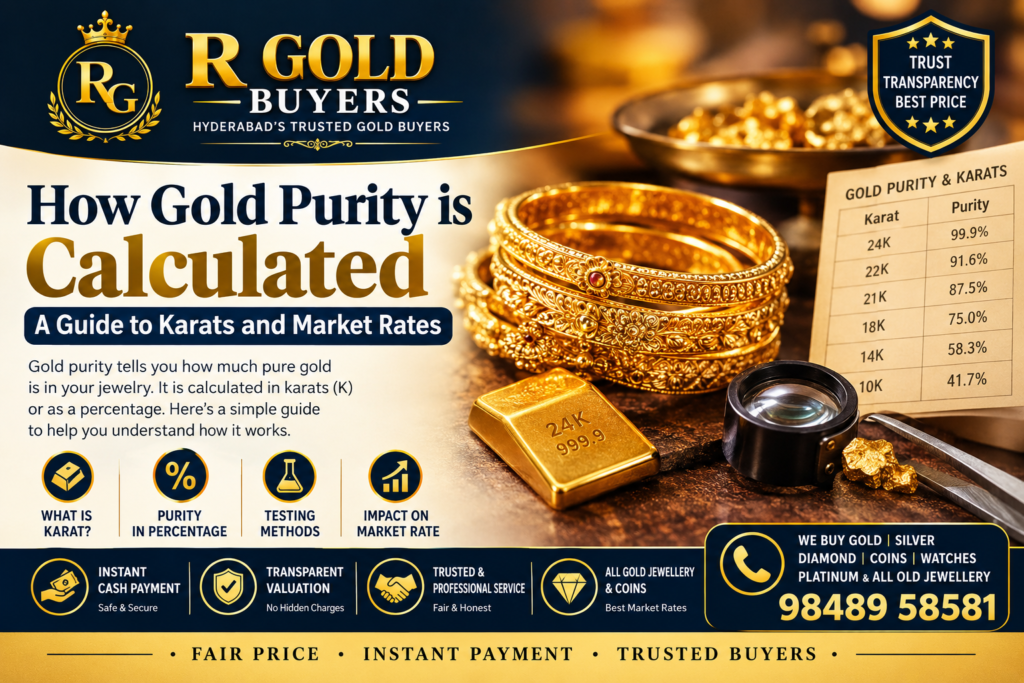
What Is Gold Purity?
Gold purity refers to the percentage of pure gold present in an item.
Pure gold is 24 karats (24K) and contains approximately 99.9% gold. Because pure gold is relatively soft, it is often mixed with other metals such as silver, copper, zinc, or palladium to make jewelry stronger and more durable.
The higher the karat, the greater the proportion of gold in the item.
Common Gold Purity Levels
| Karat | Approximate Gold Purity |
|---|---|
| 24K | 99.9% |
| 22K | 91.6% |
| 18K | 75.0% |
| 14K | 58.5% |
| 10K | 41.7% |
For example, 22K gold contains approximately 91.6% pure gold, while the remaining percentage consists of other metals.
Understanding the Karat System
The karat system divides gold into 24 parts.
The basic formula is:
Gold Purity % = (Karat ÷ 24) × 100
For example:
22K gold:
22 ÷ 24 × 100 = 91.67%
18K gold:
18 ÷ 24 × 100 = 75%
This calculation helps determine how much pure gold is contained in a particular piece.
What Is 24K Gold?
24K gold is considered the highest standard of gold purity and is approximately 99.9% pure.
Because it is soft and easily scratched or bent, 24K gold is less commonly used for everyday jewelry. It is more frequently associated with investment products such as gold bars and coins.
What Is 22K Gold?
22K gold contains approximately 91.6% gold.
It is widely used for traditional gold jewelry because it offers a combination of high purity and greater durability than 24K gold.
What Is 18K Gold?
18K gold contains approximately 75% pure gold and 25% other metals.
The additional metals can make the jewelry stronger and allow manufacturers to create different colors, including yellow, white, and rose gold.
What Is Hallmarking?
A hallmark can provide important information about the purity and authenticity of gold jewelry.
Depending on the country and applicable standards, hallmarks may indicate:
- Gold purity
- Certification or assay information
- Manufacturer or jeweler identification
- Applicable quality standards
In India, consumers should look for the applicable BIS hallmarking information when purchasing hallmarked gold jewelry.
However, a hallmark alone does not necessarily determine the final cash value of a piece. Weight, purity, current gold prices, and other factors also matter.
How Gold Weight Affects Value
Gold purity is only one part of the valuation process.
The weight of the gold is also important.
For example, suppose you have:
- Gold jewelry weight: 20 grams
- Purity: 22K
- Pure gold percentage: approximately 91.6%
The approximate pure gold content would be:
20 × 91.6% = 18.32 grams of pure gold
The actual valuation may differ depending on the applicable testing method, market price, deductions, and transaction terms.
How Market Rates Affect Gold Value
Gold prices change regularly based on international and domestic market conditions.
Factors influencing gold prices can include:
- Global gold prices
- Currency exchange rates
- Economic conditions
- Interest rates
- Inflation
- Investor demand
- Geopolitical developments
- Local market conditions
Therefore, the value of a gold item can change even when its weight and purity remain exactly the same.
Basic Gold Value Calculation
A simplified calculation for understanding gold value is:
Pure Gold Weight × Current Gold Rate = Approximate Gold Value
For example, if a piece contains 10 grams of pure gold and the applicable market rate is ₹X per gram:
10 × ₹X = ₹10X
This is only a basic illustration. The actual amount offered when selling gold may depend on testing, applicable deductions, refining costs, and the buyer’s pricing policy.
Jewelry Value vs. Gold Value
It is important to understand that the retail price you paid for gold jewelry is not necessarily the amount you will receive when selling it.
The original purchase price may include:
- Gold value
- Making charges
- GST or applicable taxes
- Design charges
- Brand premium
- Other retail costs
When selling gold, the valuation is generally focused on the recoverable gold content and current market conditions rather than the original retail price.
How Gold Purity Is Tested
Professional gold buyers and refiners may use different methods to determine purity.
Common methods include:
1. XRF Testing
X-ray fluorescence (XRF) testing can analyze the elemental composition of gold without significantly damaging the item.
2. Touchstone Testing
This traditional method uses a touchstone and testing acids to estimate gold purity. It requires experience and careful interpretation.
3. Fire Assay
Fire assay is a highly accurate testing method commonly used in professional refining and laboratory environments. It involves melting and analyzing the material.
The appropriate testing method depends on the type of gold item and the purpose of the valuation.
Factors That Can Affect the Final Selling Price
If you are selling gold jewelry, several factors may influence the amount you receive:
- Gold purity
- Net gold weight
- Current market rate
- Type of gold item
- Testing results
- Stones or non-gold components
- Refining or processing considerations
- Applicable deductions
- Buyer’s pricing policy
For jewelry containing gemstones, the weight of the stones may be deducted when determining the gold content.
Why Understanding Gold Purity Matters
Knowing how gold purity is calculated can help consumers:
- Compare gold products more effectively
- Understand gold pricing
- Estimate the approximate value of jewelry
- Avoid confusion about karat ratings
- Ask informed questions when selling gold
- Better understand market-rate calculations
It can also help you distinguish between gold purity and the overall retail price of a jewelry item.
Tips Before Selling Gold
Before selling gold jewelry, consider these steps:
- Check the purity or hallmark.
- Know the approximate weight of the item.
- Check the current gold market rate.
- Understand that stones and non-gold components may affect net weight.
- Compare offers from reputable gold buyers.
- Ask how the final valuation is calculated.
- Review any deductions before accepting an offer.
Transparency is important when selling valuable gold items.
Final Thoughts
Understanding gold purity, karats, weight, and market rates can make buying or selling gold much easier to understand. A higher karat generally means a higher percentage of pure gold, while the current market rate determines the approximate value of that gold at a given time.
Before selling gold jewelry, don’t rely solely on its original purchase price or appearance. Instead, consider its verified purity, net gold weight, current market rate, and the terms of the buyer’s valuation.
With the right information, you can make more confident and informed decisions when buying or selling gold.